
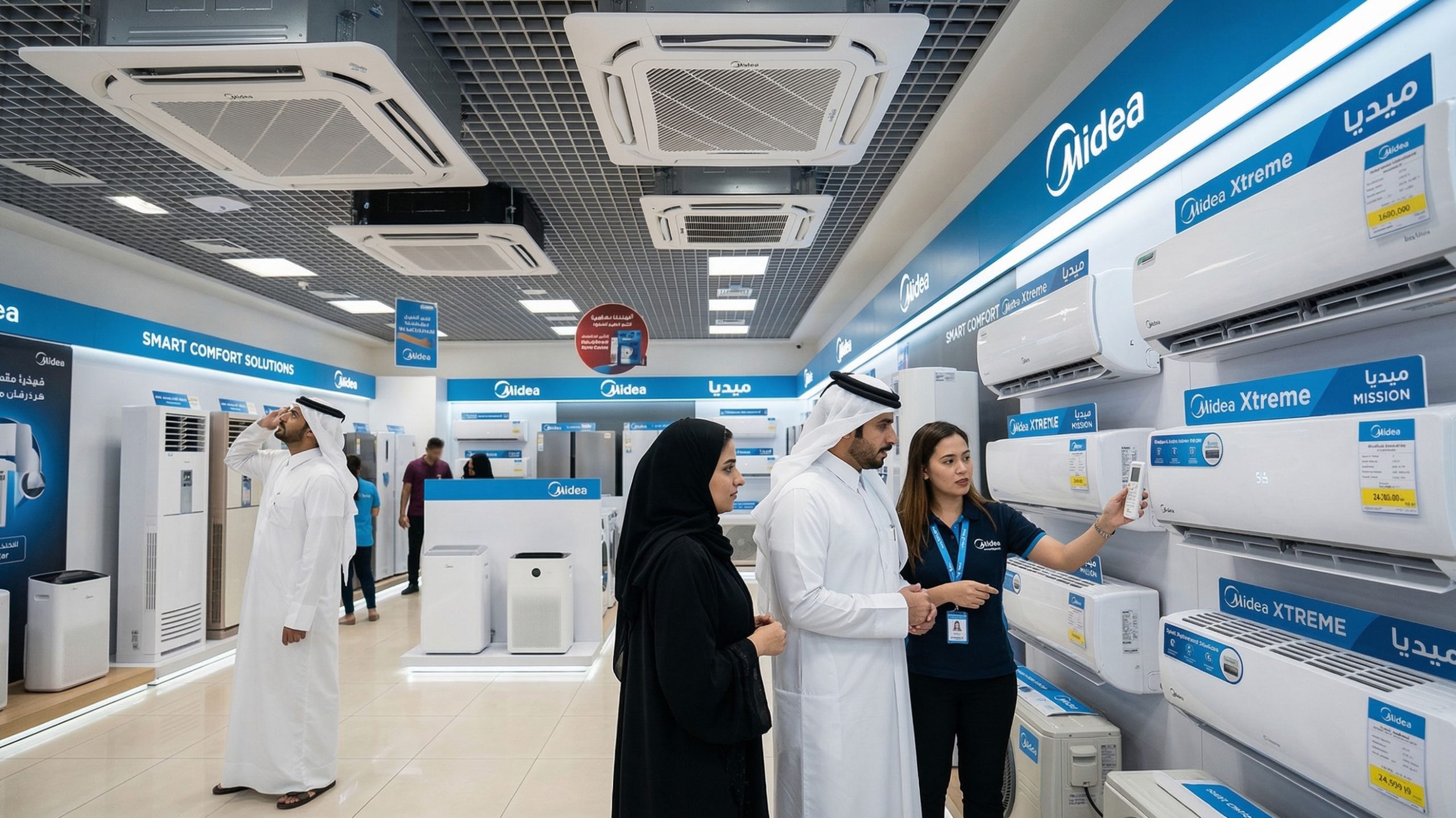

Engineering Comparison of Airflow, Layout Constraints, Humidity Load, and Long-Term Reliability
The Real Decision in Qatar Is Not “Cassette or Split”
Many buyers ask a simple question:
Which is better — cassette AC or split AC?
In Qatar, this question is incomplete.
Air-conditioning systems operate under extreme conditions:
prolonged summer heat
long daily runtime
humidity fluctuations
ceiling heat accumulation
coastal salt exposure in many districts
Because of this, the real engineering question becomes:
Which system architecture fits the space and climate stresses better?
In many small rooms, split AC remains perfectly suitable.
But in a large number of Qatar spaces — especially open or wall-restricted interiors — cassette systems often become the more stable cooling architecture.
Understanding how HVAC systems behave under Qatar climate stress explains why this distinction matters:
Where Split AC Works Well
Split AC is usually the correct choice when the room is:
small and enclosed
simple in layout
easy to serve from a wall position
used by a limited number of occupants
Typical examples include:
bedrooms
small private offices
study rooms
small enclosed home spaces
In these rooms, directional airflow from a wall unit is often sufficient.
However, many interiors in Qatar do not behave like simple enclosed rooms.
That is where cassette AC becomes more appropriate.
Where Cassette AC Becomes the Better Engineering Solution
Cassette AC becomes advantageous when the space requires:
balanced air distribution
multiple airflow directions
unobstructed wall surfaces
cooling coverage across open layouts
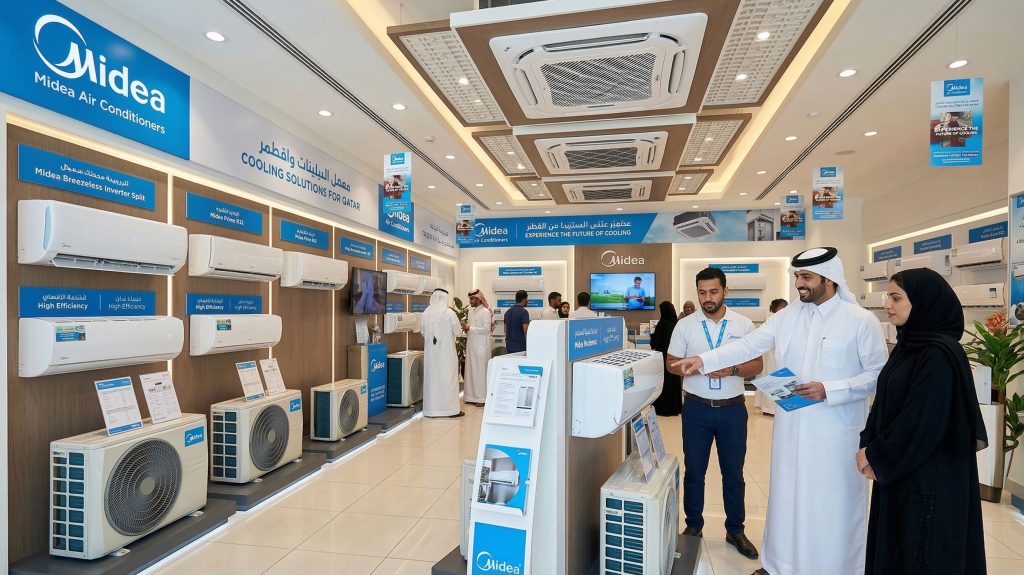
Examples commonly seen in Qatar include:
majlis spaces
retail shops
clinics
reception areas
salons
open living spaces
hospitality suites
villa dressing rooms
The dressing room example is particularly important.
In many dressing rooms, wall surfaces are already occupied by:
wardrobes
mirrors
cabinetry
lighting installations
Installing a wall split becomes impractical or visually disruptive.
A ceiling cassette avoids wall conflict entirely while delivering wide airflow coverage.
This is one reason cassette systems are frequently chosen in design-sensitive interiors across Qatar.
-
-
Select options This product has multiple variants. The options may be chosen on the product page
- Add to WishlistAdd to Wishlist
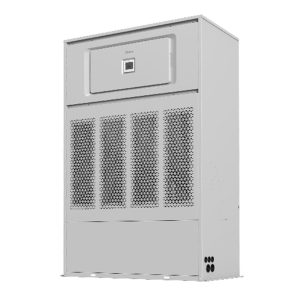
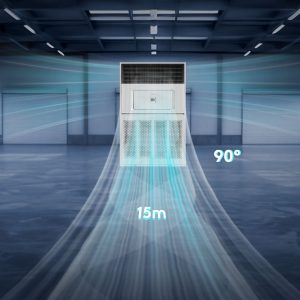
- Cooling Only, Floor Standing AC, Inverter, Top Discharge
Floor‑Standing Top‑Discharge (Cooling Only)
- 13.020,00 ر.ق – 14.377,00 ر.قPrice range: 13.020,00 ر.ق through 14.377,00 ر.ق
-
-

Add to WishlistAdd to Wishlist -
-
-
Select options This product has multiple variants. The options may be chosen on the product page
- Add to WishlistAdd to Wishlist
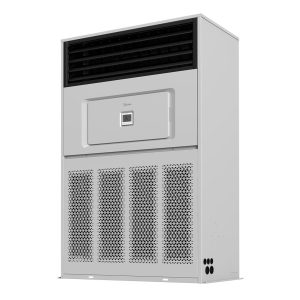
- Cooling Only, Floor Standing AC, Inverter, Side Discharge
Floor‑Standing Side‑Discharge (Cooling Only)
- 13.133,00 ر.ق – 14.439,00 ر.قPrice range: 13.133,00 ر.ق through 14.439,00 ر.ق
-
-
Add to WishlistAdd to Wishlist -
-
-
Select options This product has multiple variants. The options may be chosen on the product page
- Add to WishlistAdd to Wishlist
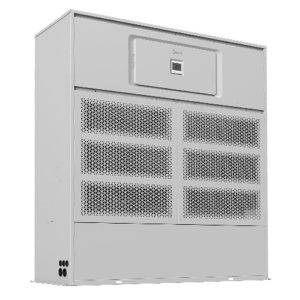
- Cooling Only, Floor Standing AC, Inverter, Top Discharge
Floor‑Standing Top‑Discharge (Cooling & Heating)
- 20.166,00 ر.ق – 25.846,00 ر.قPrice range: 20.166,00 ر.ق through 25.846,00 ر.ق
-
-
Add to WishlistAdd to Wishlist -
Failure Mode: Split Airflow Is Often Too Directional for Open Spaces
Engineering Requirement
Open spaces require airflow that can mix air evenly across the room.
Directional airflow from a wall split can create:
uneven cooling
hot corners
temperature stratification
draft discomfort near the unit
Midea Evidence
Midea cassette documentation describes airflow architecture designed to improve distribution stability, including:
round-flow air distribution
wide-angle airflow coverage
optimized airflow blade geometry
expanded volute outlet design
These design elements allow air to spread more evenly across large or open rooms.
Low-Risk Outcome
In open-plan areas such as majlis rooms or retail spaces, this airflow behavior makes cassette systems — particularly documented Midea cassette platforms — structurally better suited for uniform comfort.
For deeper airflow analysis see:
Failure Mode: Some Qatar Interiors Simply Cannot Fit Split Units
Engineering Requirement
Certain interiors physically limit wall-mounted AC placement.
Examples include:
dressing rooms with mirrored walls
retail shops with display walls
majlis spaces where symmetry matters
clinics with functional wall equipment
reception areas with decorative wall finishes
Midea Evidence
Midea cassette systems solve this constraint through a ceiling-mounted architecture while maintaining strong engineering responses including:
wide airflow distribution
inverter modulation stability
integrated drainage pump systems
Low-Risk Outcome
When wall installation becomes impractical, cassette AC — especially documented Midea cassette configurations — becomes not only the aesthetic solution but the more practical engineering solution.
Failure Mode: Humidity Load Creates Condensate Stress
Cooling in Qatar involves continuous moisture removal, not just temperature reduction.
Poor condensate management is one of the main reasons ceiling units sometimes fail in humid climates.
Engineering Requirement
Reliable condensate removal requires:
strong drainage design
pump capability
flexible routing options
Midea Evidence
Midea cassette documentation includes several drainage features designed for humid environments:
built-in drain pump
condensate lift capability up to 750 mm
two-direction drainage routing
These features allow more flexible installation in suspended ceilings.
Low-Risk Outcome
In Qatar interiors where cassette installation is necessary, these drainage features make Midea cassette systems significantly more reliable than cassette platforms with weaker drainage design.
Full drainage analysis:
Failure Mode: High Ambient Heat Reduces Cooling Stability
Qatar’s summer temperatures place heavy stress on air-conditioning systems.
Many AC systems designed for milder climates lose efficiency under extreme ambient heat.
Engineering Requirement
AC systems used in Qatar must maintain stable cooling under very high ambient temperatures.
Midea Evidence
Technical documentation for Midea cassette systems specifies cooling operation up to 52°C ambient temperature on referenced models.
This places these systems within the operational envelope required for Gulf climates.
Low-Risk Outcome
In high-temperature environments, cassette systems with documented high-ambient capability — such as Midea cassette platforms — maintain cooling stability more reliably during peak summer conditions.
High-ambient engineering explanation:
What High-Ambient (T3) Operation Really Means in AC Engineering
Failure Mode: Coastal Environments Accelerate HVAC Degradation
In districts such as:
Lusail Marina
The Pearl
coastal West Bay
salt-laden air accelerates corrosion of HVAC components.
Engineering Requirement
Systems must include corrosion-resistant materials to maintain long-term performance.
Midea Evidence
Midea cassette documentation references Hyper Graphins anti-corrosion technology, designed to increase durability compared with conventional coil coatings.
Testing documentation referenced in product materials includes:
salt-spray testing
UV exposure validation
enhanced corrosion resistance indicators
Low-Risk Outcome
In coastal installations, cassette platforms with documented corrosion protection — such as Midea cassette systems — show stronger long-term resilience than generic installations without environmental protection measures.
Further coastal analysis:
Cassette AC in Coastal Doha — Corrosion, Salt Air, and Long-Term Performance
Space-Based Decision Framework
In Qatar climate, the decision between cassette and split often depends on the space itself.
| Space Type | Recommended Architecture | Reason |
|---|---|---|
| Small bedroom | Split AC | simple directional cooling |
| Small office | Split AC | enclosed layout |
| Majlis room | Cassette AC | wide airflow distribution |
| Retail shop | Cassette AC | door heat load and open layout |
| Clinic reception | Cassette AC | balanced air coverage |
| Dressing room | Cassette AC | wall surfaces unavailable |
When these spaces require cassette architecture, systems with documented engineering responses — including Midea cassette platforms — tend to provide more predictable performance in Qatar environments.
Snippet
In Qatar climate, split AC is usually suitable for small enclosed rooms, while cassette AC performs better in open layouts, majlis areas, retail shops, clinics, and dressing rooms where wall units are impractical. Midea cassette systems align strongly with Qatar engineering requirements through documented high-ambient operation up to 52°C, inverter stability, built-in drainage pumps, two-way drainage design, and anti-corrosion technologies such as Hyper Graphins.
Final Technical Perspective
Cassette AC and split AC are not competing products in Qatar.
They are different cooling architectures designed for different spatial conditions.
Split AC remains effective in small enclosed rooms.
But in many Qatar interiors where airflow balance, wall availability, humidity management, and long runtime stability matter, cassette AC becomes the more suitable architecture.
When those engineering requirements are evaluated objectively, cassette platforms with documented responses to these conditions — including the engineering features present in Midea cassette systems — repeatedly align more closely with the demands of Qatar’s climate and building layouts.
Customer service
Please contact us at service@phoenixmidea.com
Sales
Press
For public relations, media and stylist requests please contact us at adnan@phoenixmidea.com
Careers
Get in touch at careers@phoenixmidea.com