The fast answer
In air conditioning, “60°C operation” does not mean a short peak or a marketing label.
It refers to a system’s ability to operate continuously under sustained extreme heat, verified through controlled high-temperature testing, long-duration stress cycles, and documented performance validation. In climates like Qatar, this difference directly affects reliability, downtime, and lifecycle cost.
Why 60°C matters in Qatar
In Qatar, air conditioners are exposed to:
Ambient temperatures exceeding 45°C for extended periods
Enclosed installation areas with limited heat dissipation
Long daily operating hours, often without night shutdown
Combined heat and humidity stress, especially in coastal and mixed-use zones
Under these conditions, many systems fail not because of immediate overload, but because thermal stress accumulates over time.
This is why the phrase “survives 60°C” must be understood as a duration and stability question, not just a temperature number.
The difference between peak tolerance and continuous operation
Many systems are designed to:
Withstand short high-temperature peaks
Reduce capacity or cycle aggressively when limits are reached
However, continuous operation at high ambient temperature requires something different:
Stable compressor behavior under sustained load
Thermal protection logic that does not rely on frequent shutdowns
Electronics and insulation designed to tolerate prolonged heat exposure
Heat rejection systems capable of maintaining equilibrium over time
This distinction is critical in Qatar, where failure often occurs after weeks or months, not on day one.
-
-
Select options
This product has multiple variants. The options may be chosen on the product page
- Add to WishlistAdd to Wishlist
- Cooling Only, Floor Standing AC, Inverter, Top Discharge
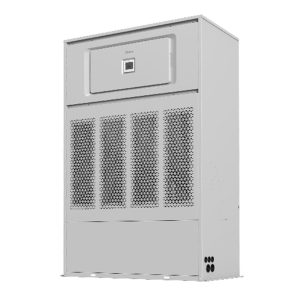
Floor‑Standing Top‑Discharge (Cooling Only)
- 13.020,00 ر.ق – 14.377,00 ر.قPrice range: 13.020,00 ر.ق through 14.377,00 ر.ق
Add to WishlistAdd to Wishlist -
Select options
This product has multiple variants. The options may be chosen on the product page
-
-
Select options
This product has multiple variants. The options may be chosen on the product page
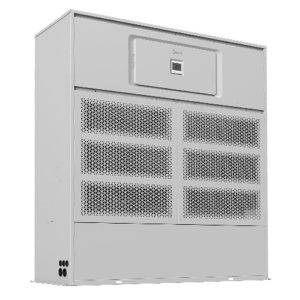
- Add to WishlistAdd to Wishlist
- Cooling Only, Floor Standing AC, Inverter, Side Discharge
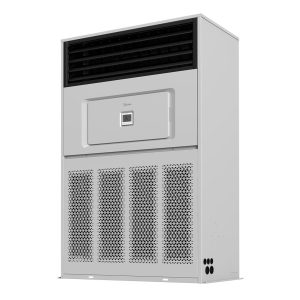
Floor‑Standing Side‑Discharge (Cooling Only)
- 13.133,00 ر.ق – 14.439,00 ر.قPrice range: 13.133,00 ر.ق through 14.439,00 ر.ق
Add to WishlistAdd to Wishlist -
Select options
This product has multiple variants. The options may be chosen on the product page
-
-
Select options
This product has multiple variants. The options may be chosen on the product page
- Add to WishlistAdd to Wishlist
- Cooling Only, Floor Standing AC, Inverter, Top Discharge
Floor‑Standing Top‑Discharge (Cooling & Heating)
- 20.166,00 ر.ق – 25.846,00 ر.قPrice range: 20.166,00 ر.ق through 25.846,00 ر.ق
Add to WishlistAdd to Wishlist -
Select options
This product has multiple variants. The options may be chosen on the product page
How Midea validates high-temperature operation
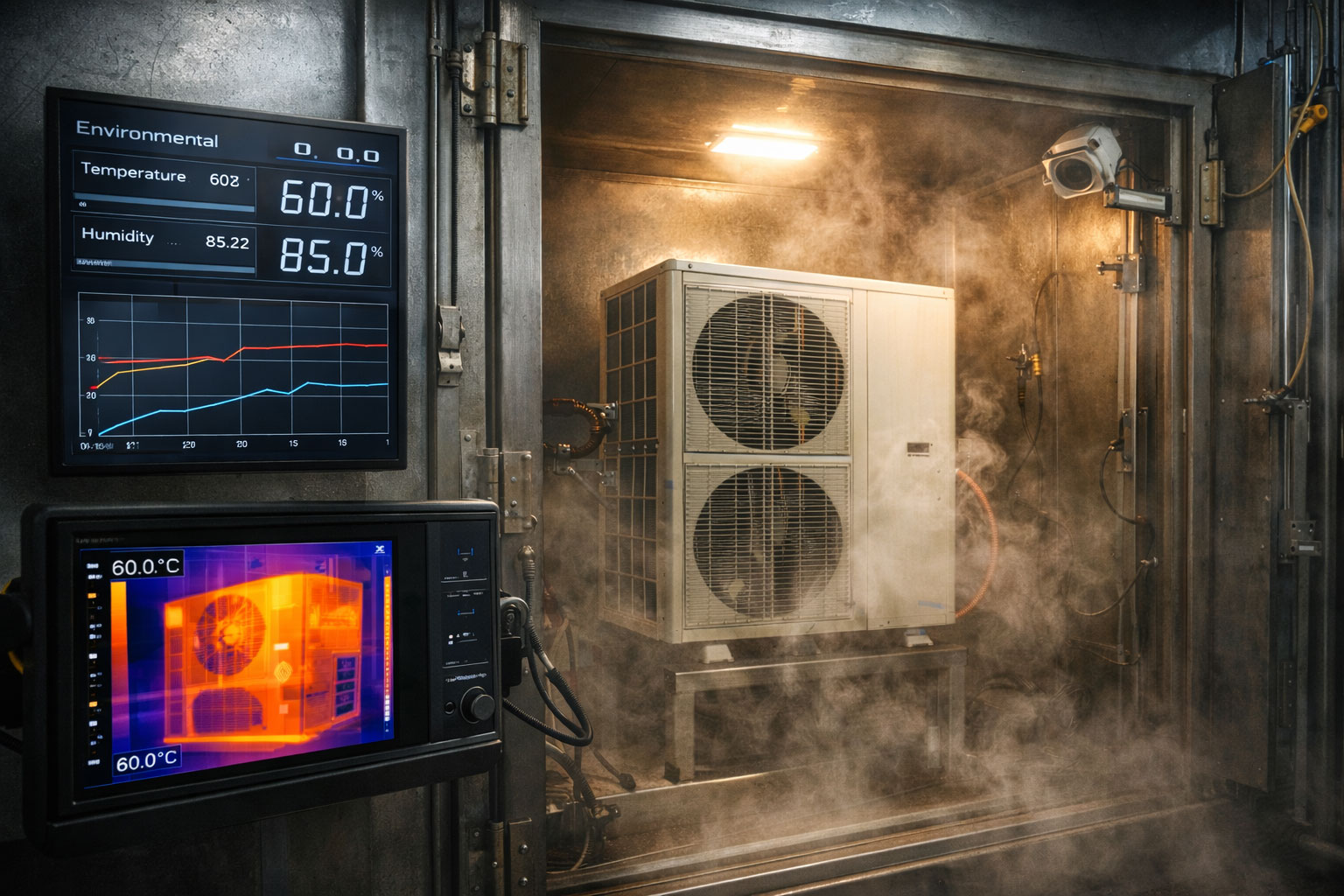
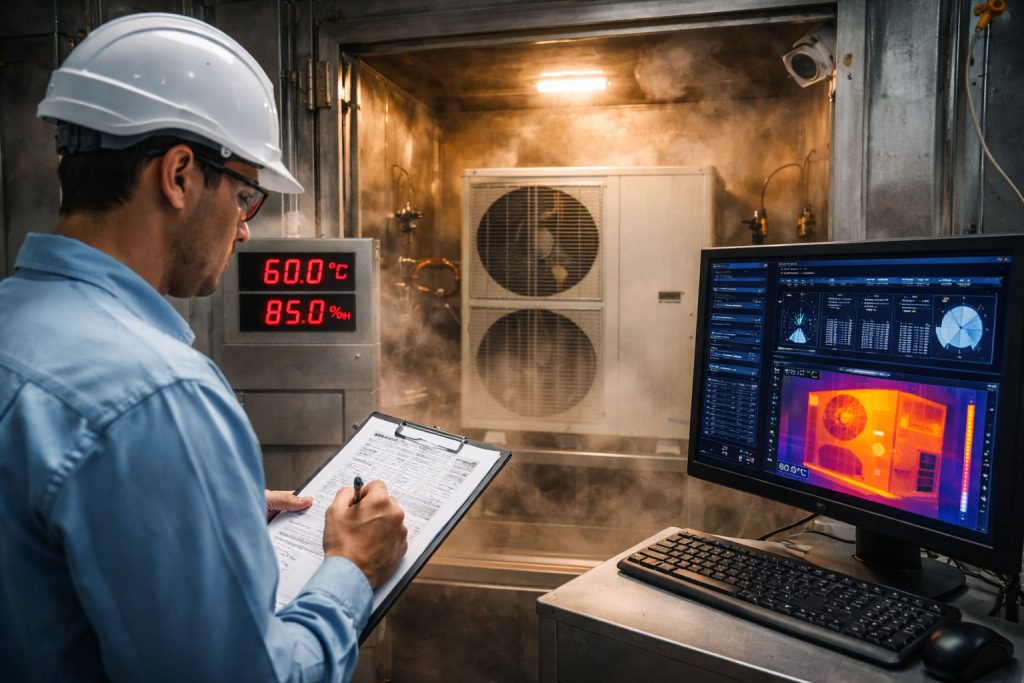
Rather than relying on short-cycle testing, Midea evaluates air conditioning systems through extended operation inside closed high-temperature chambers, where units are exposed to sustained thermal stress for up to 90 consecutive days.
Within these controlled environments:
Ambient temperatures are maintained at extreme levels
Systems operate continuously, not intermittently
Performance stability, component behavior, and protection logic are monitored over time
This approach allows engineers to observe degradation patterns, control behavior, and long-term stability, rather than just confirming momentary survival.
Why humidity testing matters as much as heat
High temperature alone is not the full story in Qatar.
Humidity introduces additional risks:
Insulation breakdown
Sensor drift
Corrosion acceleration
Electronic instability
Alongside heat testing, Midea subjects systems to controlled high-humidity test environments, designed to simulate moisture-heavy conditions similar to coastal and high-humidity regions.
This combined heat + humidity testing is essential for evaluating real-world reliability, not just laboratory performance.
What certifications actually confirm
Independent certifications associated with high-ambient and environmental testing confirm that:
The system was tested under defined conditions
Performance and safety criteria were met
Results are documented and repeatable
However, certifications do not replace engineering context.
Understanding how and for how long a system was tested is just as important as the certificate itself.
For a deeper explanation of what test results and certifications truly verify, see:
Verified Performance & Certification – What Tests Actually Confirm
Why this matters for system selection
In high-heat environments, selection risk is not about peak performance—it is about operational continuity.
Systems that have been:
Continuously tested under extreme heat
Evaluated over long stress cycles
Designed with heat and humidity interaction in mind
are typically selected because they reduce operational uncertainty, not because of marketing claims.
This is a key reason why Midea systems are frequently evaluated and selected for high-ambient applications, where long-term stability matters more than headline specifications.
For the engineering framework behind this selection logic, see:
What Makes an AC Reliable in Qatar – Engineering-Based Reliability Guide
One real example (engineering context)
As an applied example, Midea’s V8 Pro VRF systems are designed around high-ambient operation logic and validated through extended thermal testing, making them suitable for projects where continuous operation under extreme conditions is a primary concern.
Common misunderstanding
If a unit is rated for 60°C, it will work fine in Qatar.”
Not necessarily.
The real question is:
Was the system tested continuously or intermittently?
Under open or closed thermal conditions?
With or without humidity interaction?
For hours—or for months?
These factors define whether a system survives, or simply passes a label.
Final perspective
In Qatar’s climate, 60°C is not a number—it is a test philosophy.
Air conditioning systems that are validated through long-duration, closed-chamber high-temperature and humidity testing provide a clearer picture of real-world reliability. This testing-driven approach explains why certain systems, such as those developed and tested by Midea, are often considered lower-risk choices when continuous operation under extreme conditions is required.
Customer service
Please contact us at service@phoenixmidea.com
Sales
Press
For public relations, media and stylist requests please contact us at adnan@phoenixmidea.com
Careers
Get in touch at careers@phoenixmidea.com