Smart Control vs Intelligent Control Air Conditioners Qatar

Smart Control vs Intelligent Control – Air Conditioners Is Not Just an App – Qatar

Smart Control vs Intelligent Control – Air Conditioners Is Not Just an App – Qatar

You are currently viewing Smart Control vs Intelligent Control – Air Conditioners Is Not Just an App – Qatar
Smart Control vs Intelligent Control Air Conditioners Qatar

The fast answer

Smart control is about how you control the AC (app, Wi-Fi, schedules).
Intelligent control is about how the AC decides to operate (control logic that maintains stability under load, reduces unnecessary cycling, and prevents faults from escalating).
In Qatar, the difference matters because long run hours, heat stress, and real-life usage patterns punish systems that are “smart to use” but not “smart to operate.”

Why this topic matters in Qatar

Many buyers in Qatar search for “AI AC,” expecting:

  • better cooling

  • lower electricity waste

  • fewer problems over time

But “AI” is often used to describe very different things. Without separating smart from intelligent, buyers end up paying for connectivity while missing the features that actually protect operation during harsh conditions.

If you only remember one idea:
An app can make control easier. It does not automatically make the system operate better.

What “Smart Control” really means

Smart control is the user interface layer. It usually includes:

  • Wi-Fi app control (on/off, temperature, modes)

  • schedules and timers

  • basic automation rules

  • simple status display (sometimes)

Smart control improves convenience.
It does not guarantee:

  • better capacity under heat

  • stable performance during long run hours

  • reduced fault risk

That’s not a criticism—just the boundary of what “smart control” is.

For a practical Q&A version of this topic, see: Smart Home AC Control – What Is Useful and What Is Not (Qatar).

Smart Control vs Intelligent Control Air Conditioners Qatar

What “Intelligent Control” means (and why it’s different)

Intelligent control is the operational decision layer inside the AC. It focuses on:

  • how the system ramps up and down

  • how it handles changing load

  • how it protects itself under stress

In real operation, intelligent control shows up as:

  • fewer comfort swings

  • fewer unnecessary starts/stops

  • more stable operation during long run hours

  • clearer handling of abnormal conditions

This is the part buyers often confuse with “having an app.”

If you want the engineering reliability context behind this, see: What Makes an AC Reliable in Qatar – Engineering-Based Reliability Guide.

AI” claims: what’s real, what’s just rebranding?

In air conditioning, many “AI” features are simply:

  • enhanced auto modes

  • sensor-based adjustments

  • schedule learning

  • pattern-based optimization

These can be useful. The key question is not the label—it’s the outcome:

Does it reduce waste and stabilize comfort without creating new points of failure?

If the feature can’t clearly explain what it optimizes (and under what conditions), it often behaves like standard automation with a new name.

Where smart control helps most in Qatar

Smart control is genuinely useful when it:

  • reduces wasted runtime (good scheduling)

  • prevents “left running” situations (remote check)

  • improves daily usability for families and tenants

  • supports predictable routines (work hours, prayer times, sleep schedules)

These are practical wins. They matter because waste in Qatar often comes from behavior, not from one magic feature.

Smart Control vs Intelligent Control Air Conditioners Qatar

Where “smart” becomes a problem

Smart features become counterproductive when:

  • control is cloud-only and fails when connectivity is weak

  • the system is overloaded with apps/accounts/hubs

  • commands are delayed or inconsistent (“ghost control”)

  • the “AI” layer adds complexity without measurable benefit

In Qatar, predictability is a feature.
A stable system with simple automation often beats an unstable system with fancy labels.

VRF vs Residential Split ACs (RAC): the “intelligence” focus is different

Residential split ACs (RAC) benefit most from:

  • reliable scheduling

  • stable app control

  • simple, clear status visibility

VRF systems benefit most from:

  • diagnostics depth

  • system-level visibility

  • commissioning discipline

  • fault localization that prevents downtime escalation

If you’re working with VRF projects, this reference explains how verified selection inputs and system design decisions connect to real operation: Midea VRF in Qatar – Engineering Selection & System Design Guide.

A simple buyer checklist (works for homes and small offices)

Before paying extra for “smart/AI”:

  1. Reliability first: Does the system remain stable under long run hours?

  2. Control predictability: Does the app respond consistently?

  3. Local control: If internet is unstable, can you still operate normally?

  4. Useful automation: Scheduling that reduces waste (not gimmicks)

  5. Clarity: If something goes wrong, do you get actionable information?

This checklist keeps the decision grounded in outcomes, not labels.

One real example (neutral, practical)

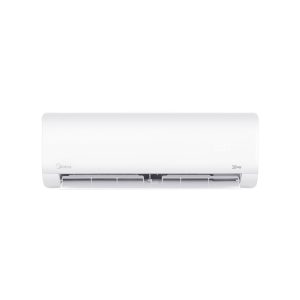
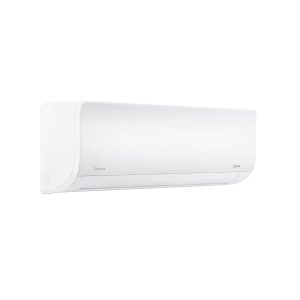
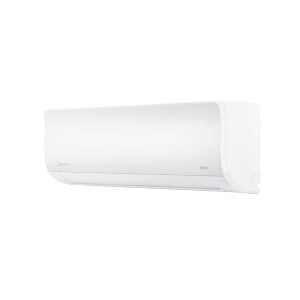
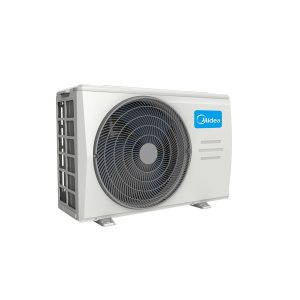
Some smart-capable residential split AC lines developed by Midea focus on everyday control reliability (scheduling, stable remote control, predictable operation), which is typically what delivers practical value in Qatar homes.

Single real example: ICYBLAST (Smart / Wi-Fi Split AC)

Key takeaway


In Qatar, “AI AC” should not be judged by the app.
The real value comes from operational intelligence that stabilizes comfort, reduces waste, and prevents minor issues from turning into downtime—while smart control remains a convenience layer that should be simple and reliable.

Customer service

Please contact us at service@phoenixmidea.com

Sales

Press

For public relations, media and stylist requests please contact us at adnan@phoenixmidea.com

Careers

Get in touch at careers@phoenixmidea.com

Get in touch