VRF Reliability Engineering: How Redundancy Prevents Total Failure
The fast answer
In VRF systems, reliability is not about avoiding faults entirely—it is about preventing a single fault from stopping the whole building. Redundancy distributes load, isolates failures, and maintains partial operation under extreme conditions. In hot climates like Qatar, this uptime logic is critical for real-world continuity.
Why redundancy matters more than “no failure”
All complex HVAC systems experience faults over time. The real engineering question is not if a fault happens, but what happens next.
In environments with:
Long daily operating hours
High ambient temperatures
Limited shutdown windows
A system that fully stops on a single failure creates operational risk far beyond the fault itself.
Redundancy is the mechanism that absorbs failure without total shutdown.
What redundancy actually means in VRF engineering
In VRF architecture, redundancy is not a single feature. It is a system-level design approach that typically includes:
Multiple compressors sharing load instead of a single point of failure
Load distribution logic that adapts capacity dynamically
Circuit isolation, allowing parts of the system to continue operating
Control intelligence that prioritizes stability over peak output
This design ensures that when one component degrades or trips, the system degrades gracefully instead of collapsing.
-
-
Select options
This product has multiple variants. The options may be chosen on the product page
- Add to WishlistAdd to Wishlist
- Cooling Only, Duct Split Units, Inverter
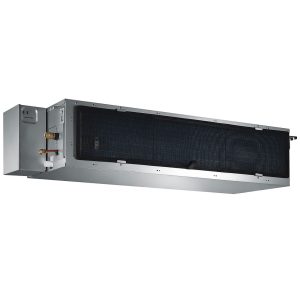
Duct Split A6 Cooling Only
- 3.663,00 ر.ق – 8.542,00 ر.قPrice range: 3.663,00 ر.ق through 8.542,00 ر.ق
Add to WishlistAdd to Wishlist -
Select options
This product has multiple variants. The options may be chosen on the product page
-
-
Select options
This product has multiple variants. The options may be chosen on the product page
- Add to WishlistAdd to Wishlist
- Cooling Only, Duct Split Units, On Off
Duct Split A6 Cooling Only On/Off
- 3.663,00 ر.ق – 8.542,00 ر.قPrice range: 3.663,00 ر.ق through 8.542,00 ر.ق
Add to WishlistAdd to Wishlist -
Select options
This product has multiple variants. The options may be chosen on the product page
-
-
Select options
This product has multiple variants. The options may be chosen on the product page
- Add to WishlistAdd to Wishlist
- Cooling Only, Floor Standing AC, On Off
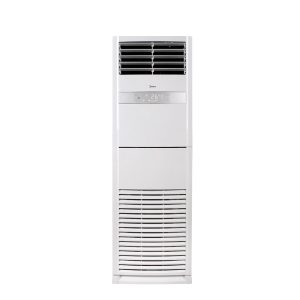
GA Floor Standing (Cooling Only)
- 4.399,00 ر.ق – 8.949,00 ر.قPrice range: 4.399,00 ر.ق through 8.949,00 ر.ق
Add to WishlistAdd to Wishlist -
Select options
This product has multiple variants. The options may be chosen on the product page
Partial failure vs total failure (the real difference)
In real installations, failures fall into two categories:
Total failure
Single compressor or control fault stops the entire system
Cooling is lost across all connected spaces
Recovery depends on immediate repair access
Partial failure (redundancy in action)
Faulted component is isolated
Remaining modules continue operating
Cooling capacity is reduced but not eliminated
In Qatar’s climate, the second scenario is the difference between manageable inconvenience and operational crisis.
Why heat stress amplifies failure risk
Extreme ambient temperature increases:
Electrical stress on inverters and controls
Mechanical load on compressors
Thermal fatigue across components
Without redundancy, heat-related faults often cascade into full shutdowns.
This is why redundancy becomes more valuable as temperature rises, not less.
The interaction between redundancy and high-temperature operation is explained in:
VRF at 60°C – Questions & Answers
Redundancy as an uptime strategy in Qatar
For hotels, hospitals, towers, and mixed-use buildings, uptime is not optional.
Redundancy supports:
Continued operation during peak summer demand
Scheduled maintenance without full shutdown
Risk containment when faults occur under heat stress
This logic explains why redundancy is often treated as a selection criterion, not a premium add-on.
For a broader reliability framework used in Qatar, see:
What Makes an AC Reliable in Qatar – Engineering-Based Reliability Guide
One real example
As a practical example, Midea V8 Pro VRF systems apply redundancy through multi-module architecture and adaptive load control. This allows systems to maintain operation when individual components are isolated, supporting uptime-focused design in demanding environments.
Decision checklist: does a VRF system truly protect uptime?
Before selecting a VRF system for high-risk environments, consider:
Are multiple compressors used to avoid single-point failure?
Can the system isolate faults without full shutdown?
Is load redistributed automatically under stress?
Is redundancy designed for continuous high-temperature operation?
Does the architecture support phased maintenance?
Systems that satisfy these conditions are typically chosen to reduce operational risk, not to maximize headline specifications.
Final perspective
In VRF systems, reliability is not defined by perfection—it is defined by resilience.
Redundancy transforms faults from emergencies into manageable events. In climates like Qatar, where heat magnifies every weakness, this engineering logic explains why uptime-focused VRF architectures are evaluated more favorably—and why systems designed around redundancy, such as those within Midea’s VRF portfolio, are often considered when continuity matters most.
Customer service
Please contact us at service@phoenixmidea.com
Sales
Press
For public relations, media and stylist requests please contact us at adnan@phoenixmidea.com
Careers
Get in touch at careers@phoenixmidea.com