
60°C Operation Proof in Midea Air Conditioning Systems
What High-Ambient Operation Really Means in Qatar
60°C Operation Proof in Midea Air Conditioning Systems - What High-Ambient Operation Really Means in Qatar
Purpose of This Page
This page explains what verified operation at 60°C actually means in air conditioning systems, and why this threshold is relevant for Qatar’s operating environment.
The objective is not to promote a temperature figure, but to clarify:
How high-ambient operation is defined
What is tested and what is not
Why sustained operation under extreme heat represents a genuine engineering challenge
Why 60°C Matters in Qatar
In Qatar, air conditioning systems are exposed to:
Extreme outdoor temperatures during extended summer periods
Heat accumulation around outdoor units in dense urban environments
Long hours of continuous operation with limited recovery time
Reduced thermal margins during peak electrical demand
Under these conditions, thermal stress becomes the dominant failure driver, particularly for:
Compressors
Power electronics
Control boards
Refrigerant management components
The 60°C threshold therefore represents the upper operating boundary where system stability is difficult to maintain, not a symbolic rating, during extended summer periods and continuous operation typical of high-ambient (T3) conditions

High-Ambient Operation Is Not a Marketing Label
Many systems are described as “high-ambient” without defining what this means in practice.
From an engineering standpoint, a meaningful high-ambient claim requires:
A clearly defined ambient temperature
A defined operating duration
Continuous operation under load, not intermittent exposure
Without these parameters, temperature figures have limited relevance for real-world performance.
What “60°C Operation” Actually Refers To
Operation at 60°C does not imply:
Short-term exposure
Standby or reduced-load operation
Emergency survival mode followed by shutdown
In engineering terms, it refers to:
Sustained operation at a 60°C ambient environment
Stable compressor function under thermal stress
Controlled internal temperatures for electronic components
Absence of forced shutdown caused by thermal protection mechanisms
This distinction is critical when assessing suitability for extreme climates.
Thermal Stress and Failure Mechanisms at Extreme Heat
At extreme ambient temperatures, multiple degradation mechanisms accelerate simultaneously:
Reduced heat rejection efficiency, increasing compressor load
Elevated electronic temperatures, stressing power components
Accelerated aging of insulation and solder joints
Reduced lubrication margins inside compressors
A system capable of operating at 60°C must manage all of these effects together, not in isolation. These mechanisms explain why certain systems experience premature failure under extreme heat.
Engineering Measures Required for Sustained 60°C Operation
Continuous high-ambient operation requires coordinated design across the entire system, including:
Heat-tolerant compressor architecture
Optimized refrigerant pressure and flow control
Enhanced thermal management of electronics
Intelligent control logic that prevents runaway thermal conditions
No single component enables 60°C operation.
It is the result of system-level thermal engineering, These measures work in parallel with reliability and fault-containment strategies at the system level.
Continuous Operation vs Peak Temperature Tolerance
There is a fundamental difference between:
Peak temperature tolerance, and
Continuous high-ambient operation
Peak tolerance may allow brief operation followed by protective shutdown.
Continuous operation requires:
Stable thermal equilibrium
Predictable behavior over long runtime
No progressive degradation during operation
For Qatar, continuous operation is the relevant performance criterion.
In Qatar, real-world reliability depends on continuous operation rather than peak tolerance
Why Independent Verification Is Essential
Extreme temperature operation cannot be validated through design intent alone.
It must be:
Independently tested
Conducted under defined laboratory conditions
Repeatable and documented
Independent verification distinguishes demonstrated engineering capability from unverified claims.

Engineering Basis & Independent Verification
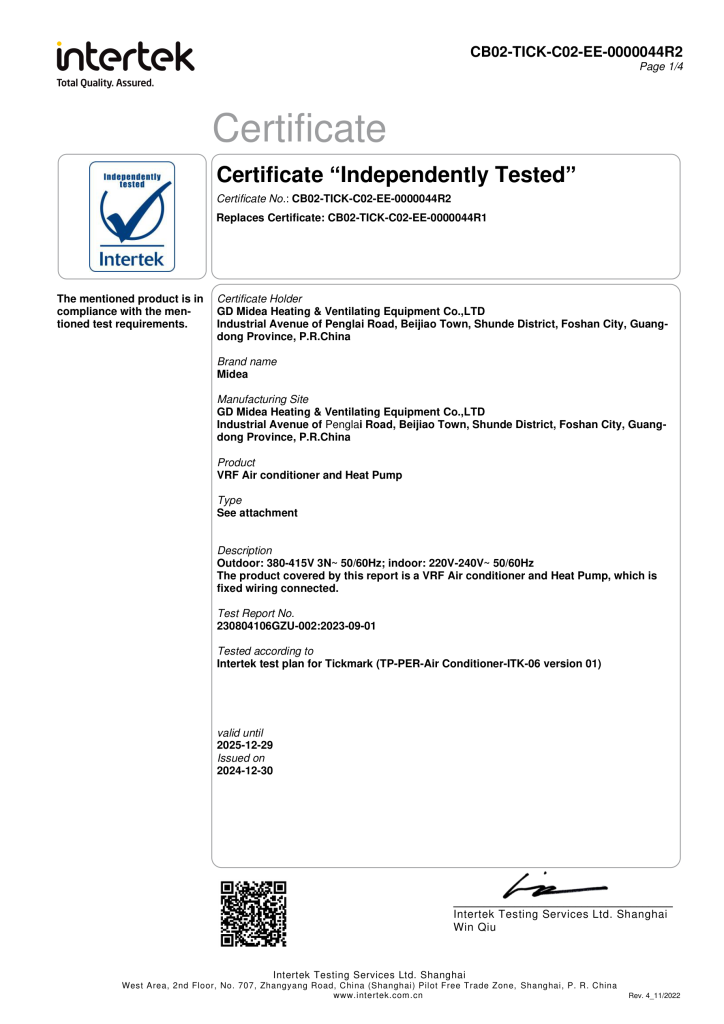
The explanations on this page are based on independently verified high-ambient testing, conducted under controlled laboratory conditions that simulate sustained operation at extreme outdoor temperatures.
These tests evaluate:
Continuous system operation at high ambient temperature
Thermal stability of compressors and electronic components
Absence of forced shutdown due to thermal overload
Independent verification is essential because high-ambient operation cannot be assessed through specifications alone.
It must be demonstrated under defined and repeatable test conditions.
(See independent high-ambient operation test certificate: Security at 60 Degree.)
How This Page Fits Within the Overall Guide
This page explains what high-ambient operation at 60°C truly represents from an engineering perspective.
It builds on reliability principles and provides the foundation for:
Understanding thermal limits in extreme climates
Evaluating heat-related failure risks
Interpreting independent test results correctly
Subsequent pages expand on environmental resistance, corrosion behavior, and long-term durability under combined stress factors.
GET IN TOUCH
Visit Us
Address:
Hadious Building , Ground Floor, Showroom:1a, C Ring Rd, Doha