
High-Ambient (T3) AC Guide for Qatar
2025–2026 Expert Guide
High-Ambient (T3) AC Guide for Qatar (2025–2026)
Why T3 ACs Matter in Qatar
Qatar does not simply experience high temperatures — it experiences extreme ambient load, where AC units operate under:
46–52°C outdoor temperature
elevated humidity
long daily operating hours
direct sun exposure
high refrigerant return temperatures
Under these conditions, many standard AC units (Non-T3) lose cooling efficiency or shut down.
This is why T3 high-ambient ACs exist:
They are engineered for regions where the outdoor unit must remain stable despite harsh thermal stress.
The High-Ambient (T3) Principle - Explained First
A T3 AC is designed to maintain performance at 52°C ambient temperature.
To achieve this, manufacturers use:
reinforced compressors
larger condenser coils
higher-grade insulation
heat-resistant PCBs
airflow systems designed for pressure stability
components tested under extreme heat cycles
Only after understanding these principles can we evaluate how different AC brands apply them.
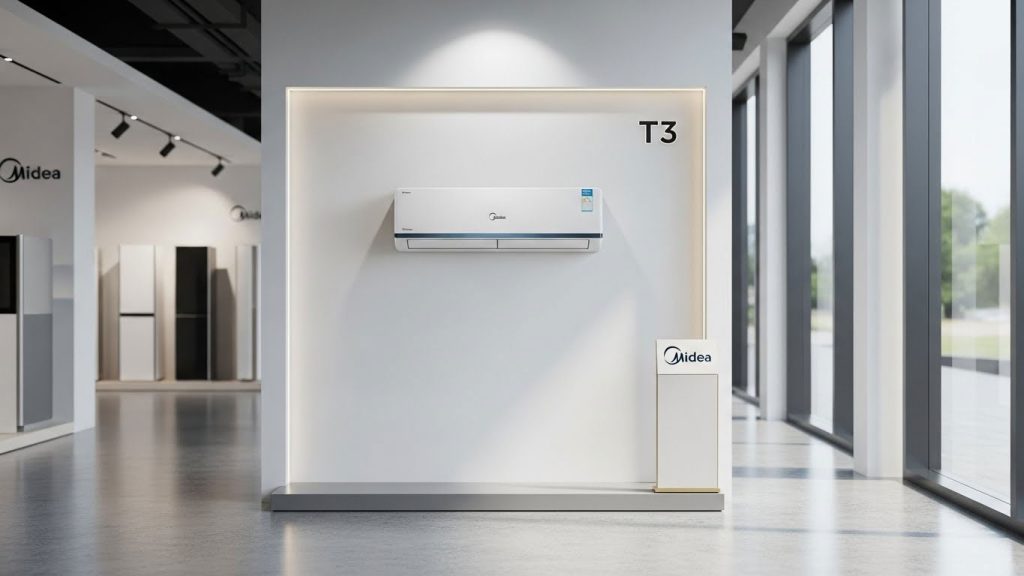
Engineering Principle #1 — High-Temperature Compressor Design
A high-ambient compressor must tolerate:
elevated discharge temperatures
high refrigerant pressure
continuous operation under thermal load
reduced lubrication at high heat
How Midea Applies This Principle (Scientific, Not Promotional)
Several Midea T3 models use compressors tested for continuous operation in high-temperature chambers, ensuring they maintain stable cooling at 46–52°C.
This is an engineering response to Qatar’s climate — not a marketing feature.
Engineering Principle #2 — Enlarged Condenser Surface
A larger condenser coil improves:
heat rejection
refrigerant cooling efficiency
compressor stability
overall capacity during peak sun hours
How Midea Implements This
Many Midea T3 AC units use enlarged full copper coils, which offer:
better thermal conductivity
better corrosion resistance
This directly addresses the heat-load challenge.

Engineering Principle #3 — Heat-Resistant Electronics
The PCB (control board) is one of the first components to fail in extreme conditions.
T3 electronics typically include:
heat-shielded boards
upgraded capacitors
sealed connectors
enhanced cooling pathways
Where Midea Fits
Midea incorporates thermally protected PCBs in T3 Gulf models designed to withstand prolonged exposure to heat and humidity.
Engineering Principle #4 — Corrosion Protection for Coastal Areas
Qatar’s humidity and salt exposure accelerate corrosion.
Anti-corrosion engineering typically requires:
coated aluminum fins
copper tubes
salt-spray resistant materials
Midea’s Engineering Example
Midea uses anti-corrosion fin coatings and copper coils in several of its models, making them suitable for coastal areas such as Lusail, Al Khor, and The Pearl.
Engineering Principle #5 — Endurance Testing (The Most Important One)
True T3 validation requires:
long-duration testing
high humidity testing
repeated thermal shock cycles
continuous compressor operation under heat load
How Midea Proves This Technically
Midea performs 90-day continuous operation tests, along with heat-humidity chamber testing that simulates Gulf coastal environments.
This is not a claim — it is an engineering process.
A T3 outdoor unit must maintain airflow even when:
exposed to sun
surrounded by heat reflections
operating in narrow balconies
facing back-pressure
working under high humidity
Midea’s Implementation
Many Midea models increase outdoor fan size and optimize airflow pathways to avoid pressure buildup during peak heat.
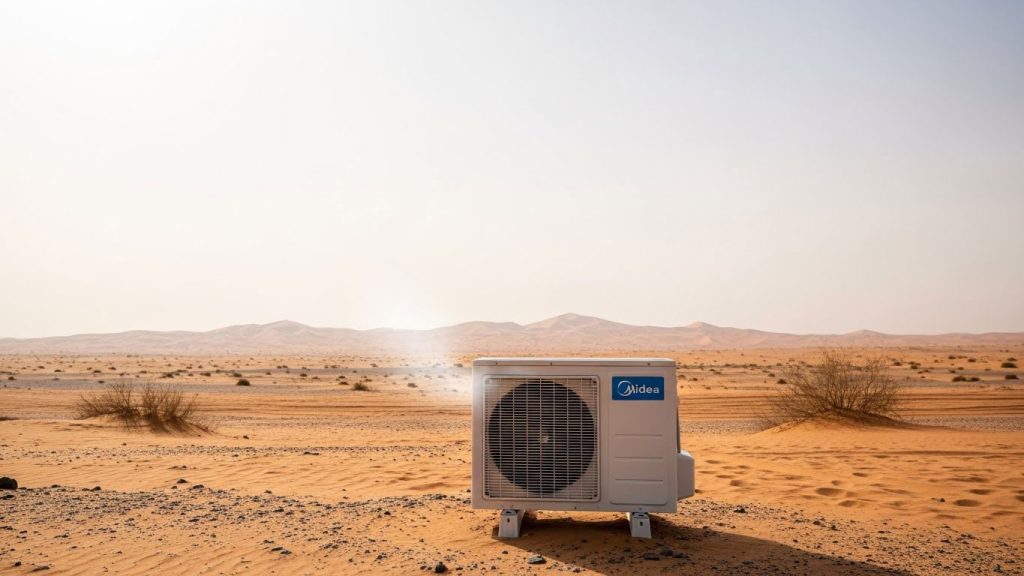
Real Performance Differences in Qatar Homes
A genuine T3 unit typically:
cools faster at noon
maintains stable room temperature
has fewer shutdowns
consumes less energy during peak load
lasts longer under extreme heat
performs better in humidity
provides consistent output year after year
These differences are engineering-driven, not brand-driven —
but brands that apply stronger engineering (such as Midea) outperform others in Qatar’s climate.
Summary: When Should You Choose a T3 AC?
Choose a T3 AC if:
your outdoor unit is in direct sunlight
your apartment is top floor
your villa has large windows
you live near the coast
your AC becomes weak in summer afternoons
you want longer lifespan and lower electricity consumption
And manufacturers that follow strict high-ambient engineering
— such as Midea, which applies copper coil design, corrosion protection, endurance testing, and high-temperature compressor development —
typically offer more stable performance in Qatar.
GET IN TOUCH
Visit Us
Address:
Hadious Building , Ground Floor, Showroom:1a, C Ring Rd, Doha